Last updated November 22, 2026
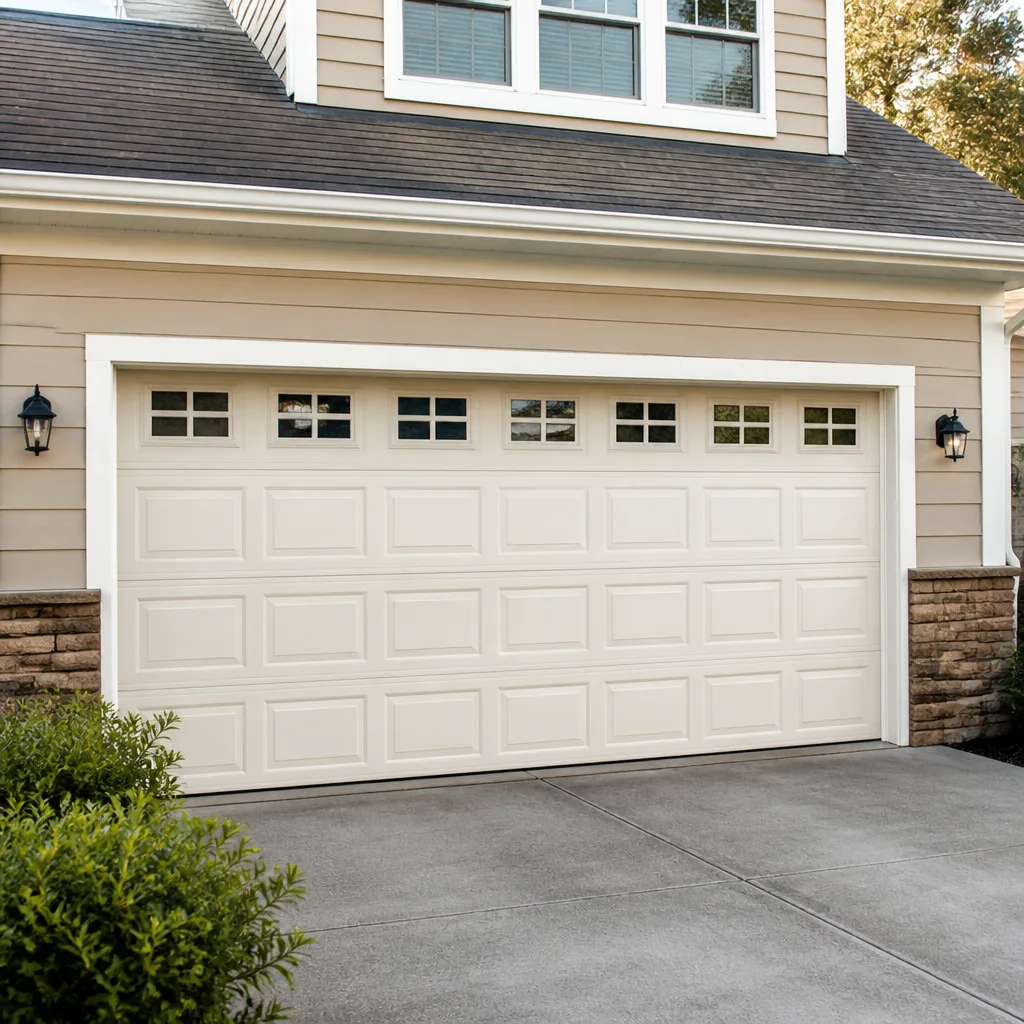 Raised-panel steel
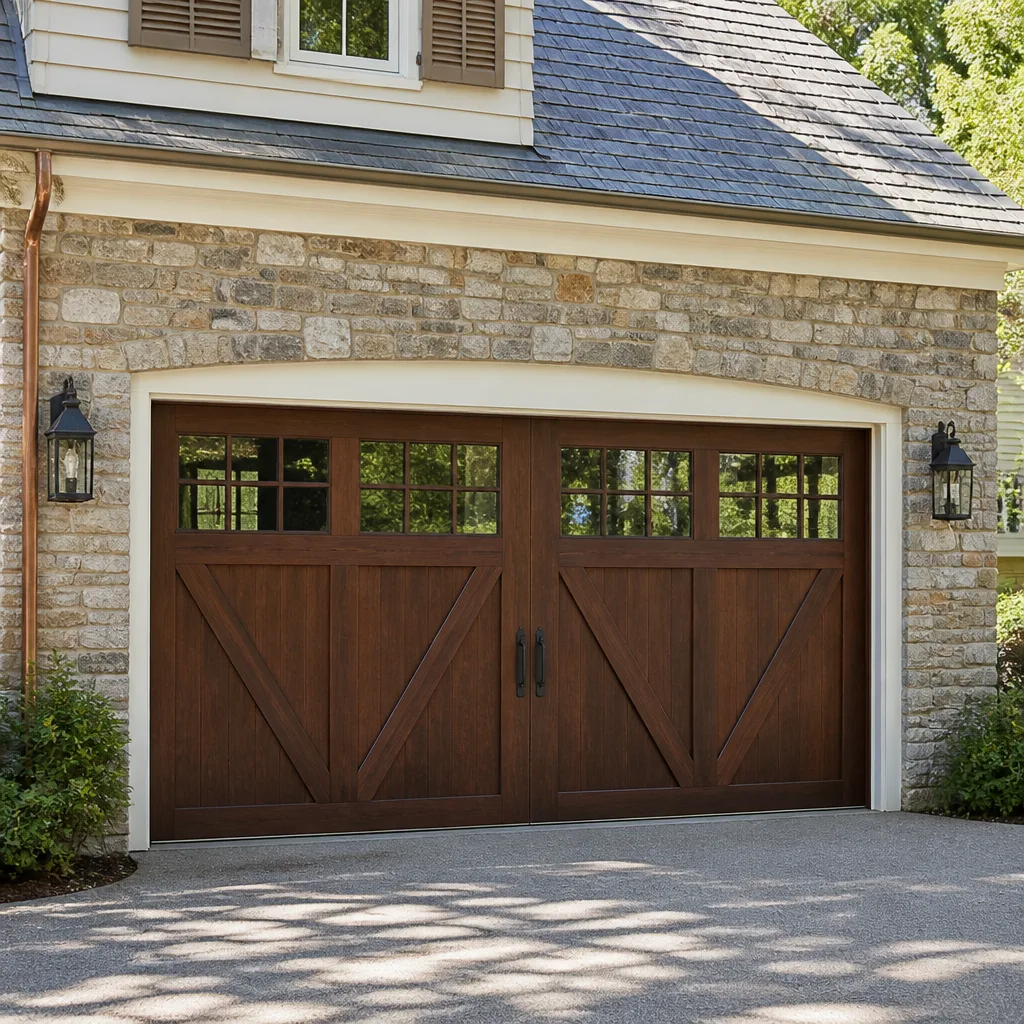 Carriage house
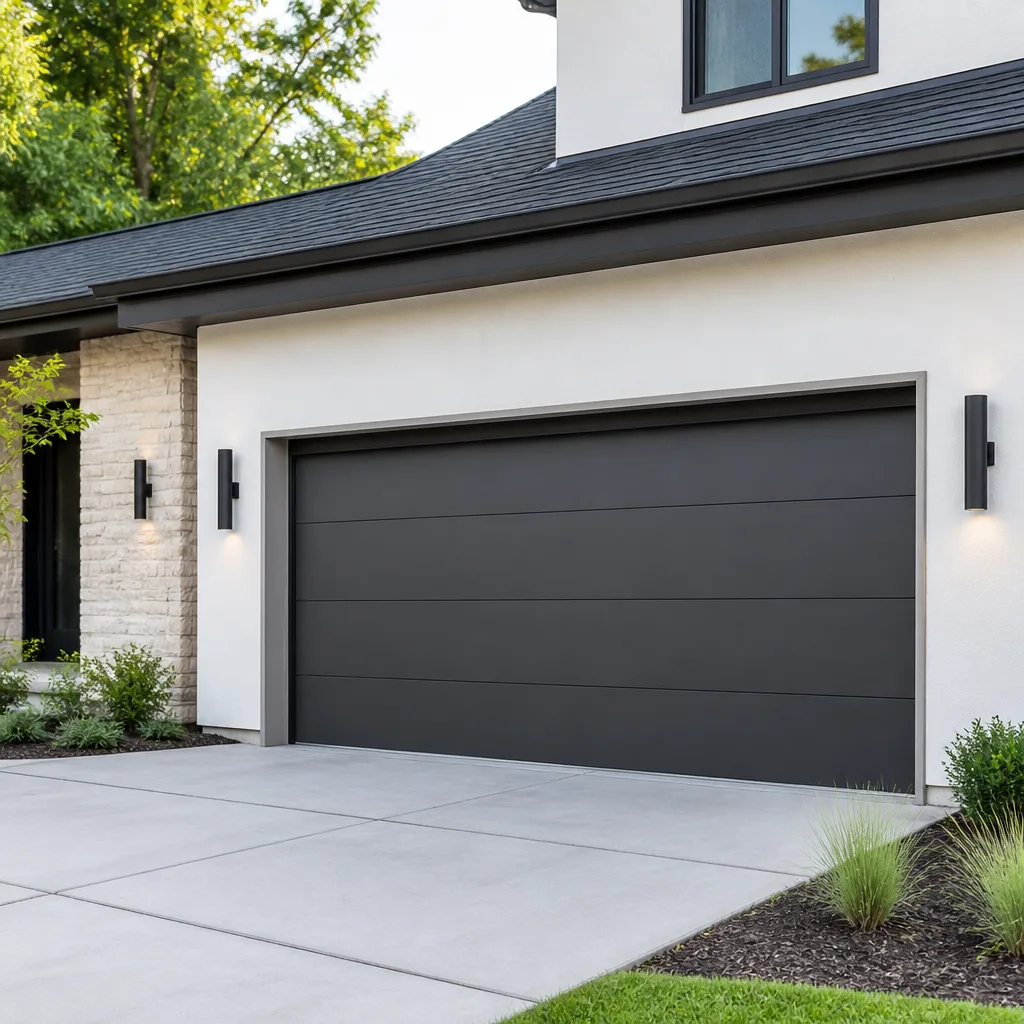 Modern flush
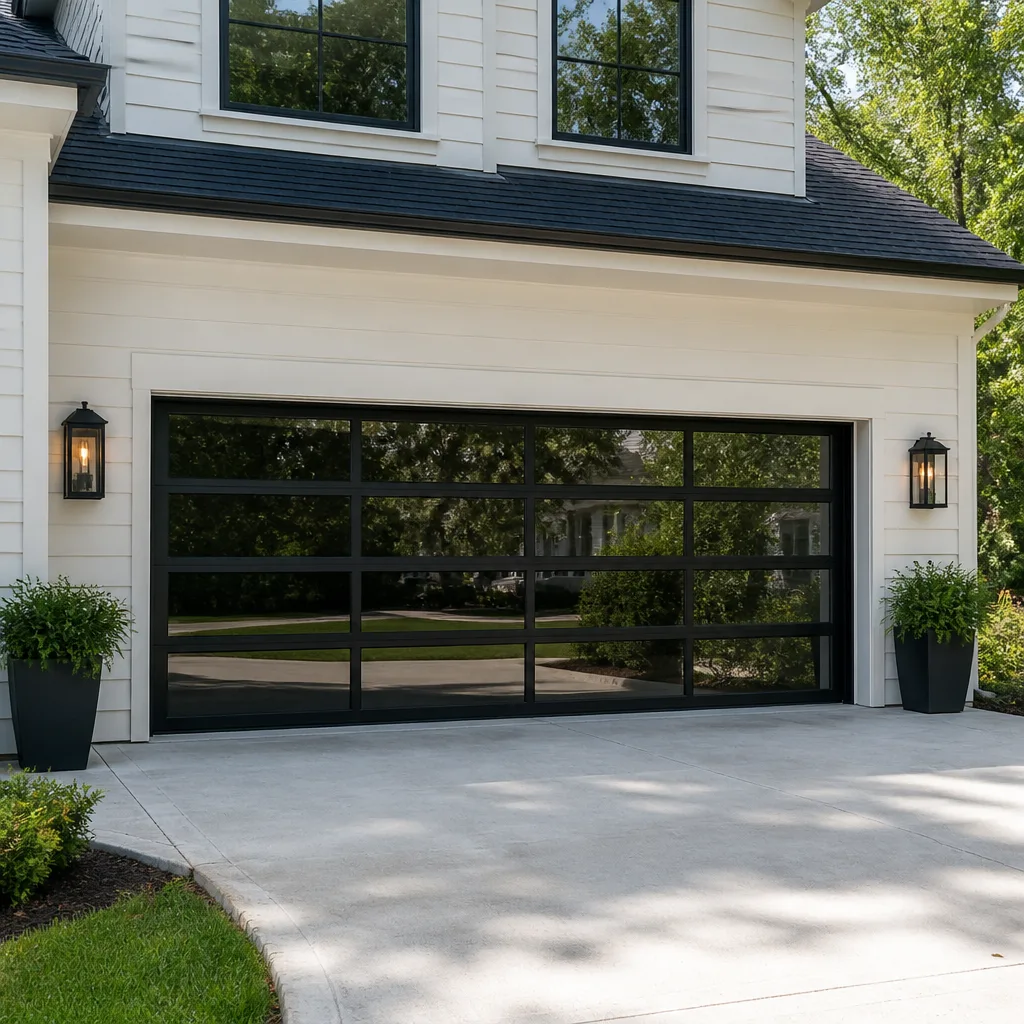 Full-view glass
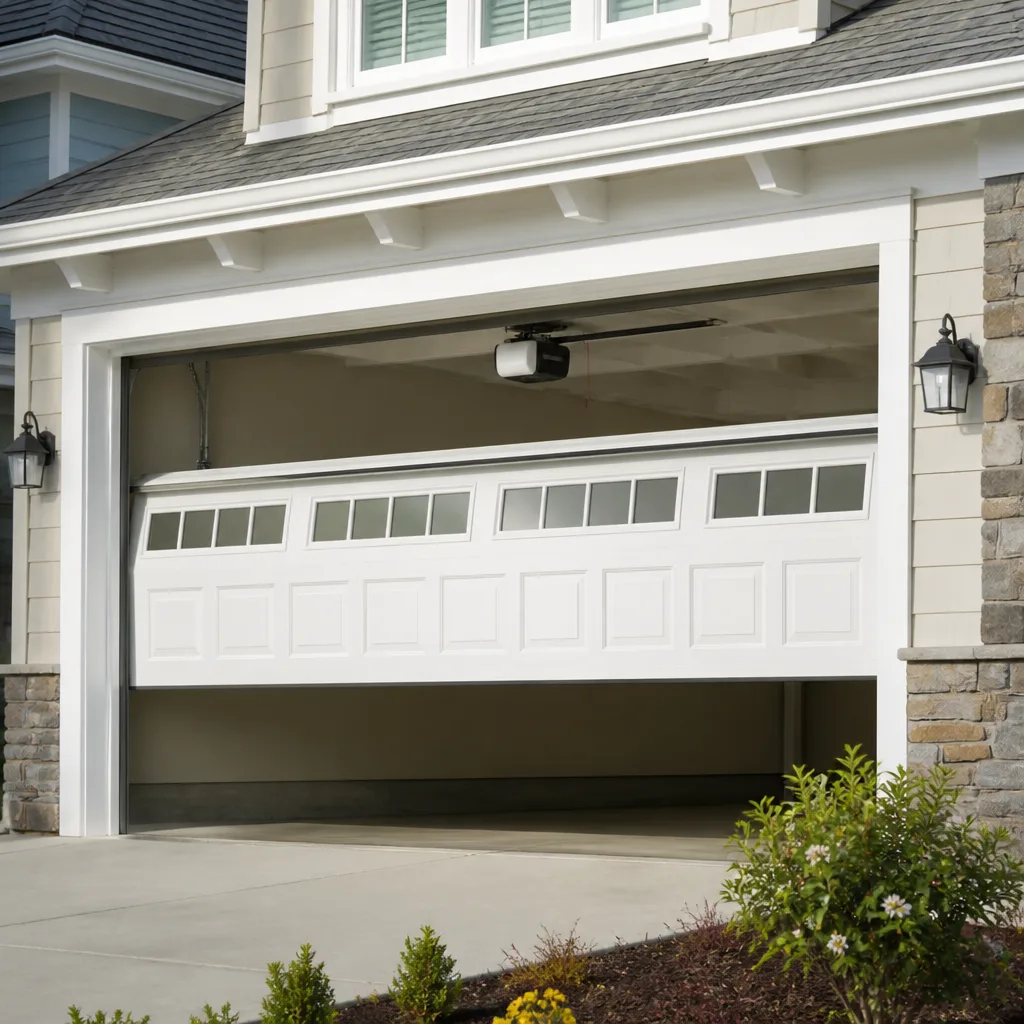 LiftMaster openers
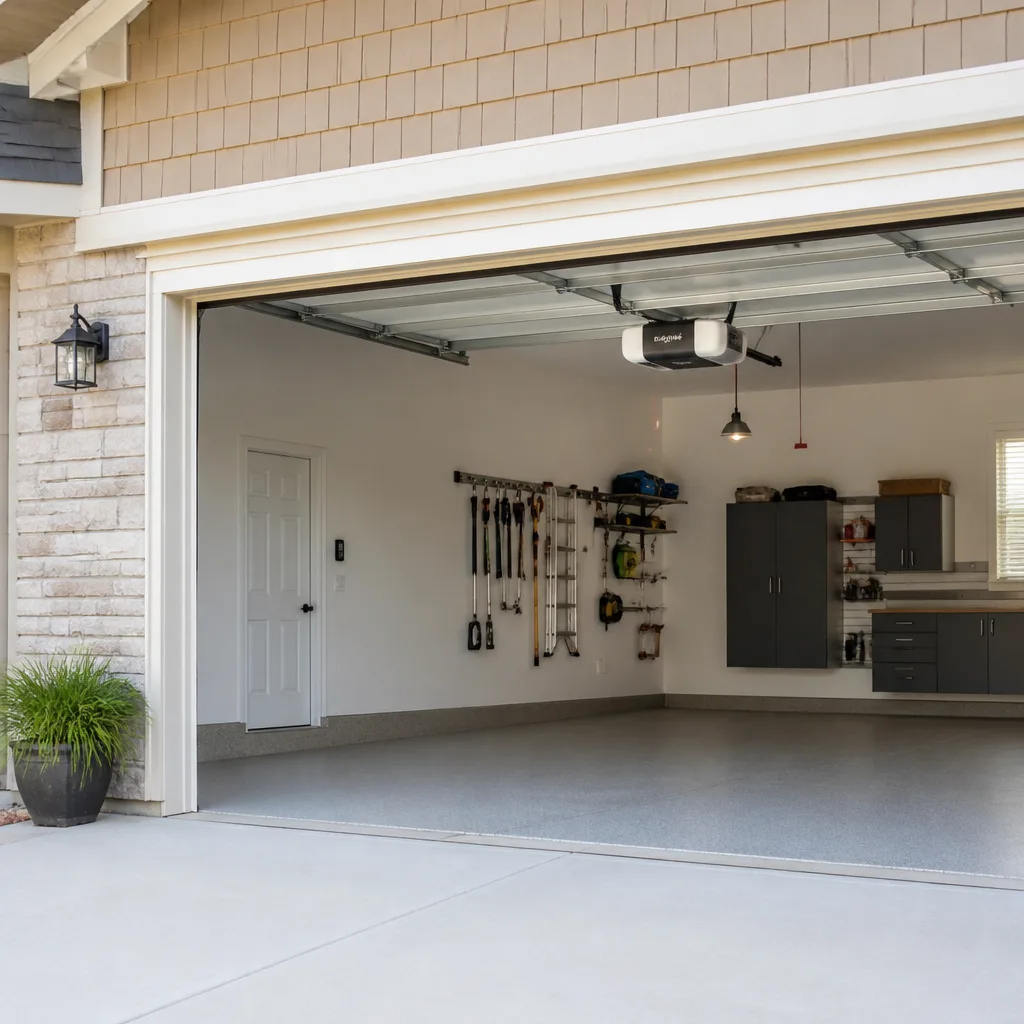 Chamberlain openers
Full 25-point door and opener safety check with every visit - springs, cables, rollers, tracks, and your LiftMaster or Chamberlain opener included
You get a price before we start. It does not change when the pro arrives.
Get your free estimateGarage Door Repair Troubleshooting in Orland Park: Common Problems and How to Fix Them
A door that reverses the moment it touches the floor and a door that refuses to move at all look like the same problem from the end of the driveway. They aren’t. One is usually a sensor issue or a travel-limit setting. The other points at a spring, a track, or a dead opener. Homeowners who chase the symptom instead of the system spend time and money on the wrong repair. In Orland Park, where the garage is the primary door for most families, a misdiagnosis costs you more than a day of inconvenience. This guide teaches you to read the door’s behavior the way a technician does. You’ll learn to map specific symptoms to the part that’s actually failing, spot the one spring symptom that’s obvious without touching anything, and know what you can safely adjust versus what needs a trained hand.
Quick Answer
Most garage door problems in Orland Park fall into four systems: springs, tracks and rollers, the opener, and safety sensors. If the door won’t move at all, suspect a snapped torsion spring or a dead opener. If it reverses mid-close, the safety sensors are the usual cause. If it grinds or drags unevenly, look at tracks and rollers, especially after freeze-thaw weather. Anything involving springs or torsion hardware should go to a trained technician, never a DIY fix.
Styles & brands we work with
- Raised-panel steel
- Carriage house
- Modern flush
- Full-view glass
- LiftMaster openers
- Chamberlain openers
Table of Contents
- The Symptom-to-System Diagnostic Matrix
- Why Torsion Spring Failures Are Misdiagnosed
- Sensor Alignment, Obstruction, and Failure
- Track and Roller Issues in Orland Park’s Freeze-Thaw Cycles
- What You Can Safely Adjust vs. What Needs a Pro
- Opener Problems by Brand and System
- When a Repair Becomes an Emergency
- Keeping Your Door Working Through the Year
The Symptom-to-System Diagnostic Matrix
Here’s the core skill this whole guide builds on. Before you call anyone, watch your door and match its behavior to the component. The garage door system has four main parts, and each one fails in its own recognizable way. Read the door, not the remote.
Use this matrix to narrow the problem:
- Door reverses immediately after touching or nearing the floor. This points at the safety sensors first, or a travel-limit setting that’s short by an inch. Rarely a force-setting issue. This almost never means the springs are bad.
- Loud bang from the garage, door won’t move after. A torsion spring or cable has typically failed. In many Orland Park homes the door stays put because the spring was doing the lifting. Stop operating it. This is the signature spring-failure scenario.
- Door opens but won’t close, or vice versa. The opener is receiving the signal but one direction is blocked. Check the sensors and the limit settings before assuming the motor is dead.
- Door moves unevenly, one side lags, or it jams partway. A roller is off-track, a cable is slack on one side, or a track has bent. This is a mechanical alignment problem.
- Grinding, squealing, or slow movement in late winter. Tracks and rollers are the usual suspects after our freeze-thaw swings. Lubrication and track condition matter.
- Opener runs but the door doesn’t move at all. Either the springs failed, the door is disconnected from the carriage, or the emergency release was pulled. The opener motor may be fine.
What we’ve seen in Orland Park is that the first and fourth rows get mistaken for each other constantly. A door that lags on one side and trips the sensor on the way down looks like a sensor problem. It’s often a track or roller problem that changes the door’s path, not the sensors. Reading two symptoms together, not just one, is how a technician separates the causes without guessing.
The key idea: the door is a system, and the parts fail in health-code fashion, one weak link taking the blame for the whole. Learn the four systems and where they overlap, and you’ll diagnose more reliably than most people who own the door.
Why Torsion Spring Failures Are Misdiagnosed (and the One Symptom That Makes It Obvious)
Torsion springs are the highest-tension parts on an entire residential garage door. A failed spring is the most dangerous thing a homeowner can try to fix and, in our experience, the most commonly misdiagnosed. Homeowners hear the bang, assume the opener died, and call for the wrong service. Or they try a spring repair themselves with a winding bar from the garage. Don’t.
The one symptom that makes a torsion-spring failure obvious, without touching anything: the door is dead heavy when you lift it by hand with the opener disconnected, and it won’t stay up on its own. A healthy door, disconnected from its opener, lifts with moderate force and holds in place. A failed spring means the door has lost its counterbalance, so you’re lifting the full weight of the panel, door, and hardware. That’s the giveaway. If the door feels like it weighs far more than it should, the spring is the suspect.
Other signs point the same direction:
- A loud bang or snap that came from the garage, especially following a period of the door working fine.
- A visible gap in the torsion spring coil above the door.
- A door that hangs at a strange angle or that opens a few inches and stops.
- Cables that appear slack or twisted on one side.
Why it matters: torsion springs store enough energy to cause serious injury. Winding bars, cables under tension, and the door’s own weight are all dangerous if handled wrong. This is the single area where we’ll always say the same thing: spring repair done safely means calling someone trained in it. Our technicians handle garage door spring repair as a named specialty, not as an afterthought, because handling that tension correctly is the whole job.
One practical note for Orland Park: our freeze-thaw swings put extra stress on springs and cables, and a spring that’s been cycled hard through a cold winter tends to give way in late winter or early spring. If your door’s been noisy or sluggish since January, it’s worth having it looked at before it fails on a morning you need to leave.
Sensor Alignment, Obstruction, and Failure: Three Different Causes That Look Identical
If your door reverses the moment it starts to close, the safety sensors near the floor are the first thing to check. But “sensor problem” is three different diagnoses wearing the same face. Getting the right one saves you a wrong call.
Here’s how to tell them apart:
- Obstruction. The path between the two sensor eyes is blocked. A leaf, a garage-stored box, a trash can, or dirt on the lenses all do it. Clear the line and clean the lenses. Test the door. If it now closes, it was obstruction.
- Alignment. One sensor was bumped out of aim. The eyes have to point at each other. Look for a steady indicator light on each sensor; a flickering or dark light on one means it’s not seeing the other. Gently repositioning the bracket often brings it back. If a bay door gets knocked by a car or a kid’s bike, this is the usual culprit.
- Sensor failure. The eyes are aligned, the lenses are clean, and the path is clear, but the door still won’t close and an indicator light stays dark. That’s a failed sensor or a wiring fault. It may be the sensor itself, a damaged wire, or the opener’s logic board. A component actually failed.
Why this matters in Orland Park: many garages here are tight, and a parked car or a row of recycling bins can nudge a sensor bracket without anyone noticing. The next morning the door reverses and it looks like a catastrophic failure when it’s a five-minute alignment.
One thing homeowners get wrong: taping over the sensors or disabling them to “make it close.” That removes a safety mechanism, and no technician should leave that in place. It’s also the kind of workaround that gets someone hurt. If the door only works with the sensors defeated, you have a real fault, not a setting to live with.
If the alignment and cleaning checks don’t bring the door back, it’s time to call. We handle garage door opener repair as a standalone job, so a sensor or logic-board issue gets diagnosed directly instead of getting bundled into a vague “general repair.”
Track and Roller Issues in Orland Park’s Freeze-Thaw Cycles
If your door grinds, drags, or moves slower than it used to as winter breaks, the likely origin is tracks and rollers. Orland Park’s freeze-thaw pattern is hard on the parts that guide the door. Moisture gets into the metal track, freezes overnight, expands, and thaws the next day. Over a season, that cycle can bend a track out of true, loosen a roller axle, or cause grime and rust to build up where the rollers travel.
What this feels and sounds like:
- Grinding or a metal-on-metal scrape as the door travels.
- Squealing rollers, especially on the first few cycles after a cold night.
- One side of the door lagging or the door tilting.
- A door that jams partway and reverses.
- Visible bends, dents, or separation in the vertical or horizontal tracks.
The most common track issues around here show up in late winter, when the freeze-thaw strain of the season compounds. A door that was fine in October starts dragging in March. Sometimes it’s as simple as lubrication and a minor track adjustment. Sometimes a roller has worn flat and is scoring the track, which needs a replacement.
Two things homeowners do that make this worse:
- Forcing a jammed door. If the door is bent in the track, running it up and down strips the rollers, bends the track further, and can drop a cable. Stop operating it once it’s misbehaving.
- Wrenching the track without knowing the target. Track alignment is set with the door’s position and the roller depth; loosening the bolts and shoving the track back can make it worse. If a track’s visibly bent, that’s a call.
The good news is that track and roller work is among the easier fixes once you’ve identified it. We see this constantly in Orland Park in the thaw season, so it’s a familiar repair rather than a mystery.
What You Can Safely Adjust vs. What Needs a Pro
Here’s where honesty pays off. Some things you can absolutely handle from the driveway. Others you should not touch. The dividing line is whether the adjustment involves stored energy (springs and cables) or just settings and cleaning.
Safe to handle yourself, with care:
- Clearing obstructions from the sensor path and cleaning the sensor lenses.
- Gently realigning a sensor bracket that was bumped.
- Wiping away grime and applying a proper garage door lubricant to rollers and tracks.
- Testing the door’s manual and opener operation to gather symptoms.
- Adjusting travel limits and force settings on the opener, per the owner’s manual. These are settings on the opener unit, not part of the tension hardware.
Leave to a trained specialist:
- Any spring work, including winding, replacing, or adjusting a torsion spring.
- Cables, which are under tension and can whip or drop if released.
- Replacing a torsion shaft, drums, or other hardware above the door.
- Bent tracks that need straightening or replacement, especially when the door can’t be operated safely.
- Electrical work at a wall switch or opener, if the issue isn’t just a battery or reset.
Travel-limit and force adjustments are common fixes for doors that “almost close” or reopen at the very end. The opener’s manual tells you exactly where those dials or buttons are, and you can safely tune them. But if you change the travel limits and the door still misbehaves, the real problem is mechanical, not a setting. That’s when a pro should look.
Why the line matters in Orland Park: our spring hardware and cables get extra cycles in a family-heavy town where the garage is the main entrance. A spring that’s finally failed, or a cable that’s gone slack, is not a driveway job. A sensor tweak is. Knowing the difference is the whole point of this section.
Opener Problems by Brand and System
Opener failures are the most common single repair need in residential garages, and the smart ones fail differently than the legacy ones. We service openers from LiftMaster, Chamberlain, Genie, and Craftsman, and we know how each one behaves. Brand matters: a symptom on a Chamberlain or LiftMaster (the myQ ecosystem brands) often gets traced back to a Wi-Fi or app-side issue or a battery, while older Genie and Craftsman units may need logic-board or safety-beam attention.
What the failure usually is
- Remote or wall switch does nothing. Dead battery, lost pairing, or a wall switch that’s failed. On smart openers, a dropped network connection can leave a remote working while the app doesn’t.
- Opener runs but the door doesn’t move. The emergency release is pulled, the carriage is disconnected, or the springs failed. Check the release first.
- Door reverses at the floor. Sensors, covered above. Also a travel-limit issue if it reverses one inch off.
- Random operation, or the door moves on its own. A stuck button, a crossed signal, or a logic-board fault. Unplug the wall switch and test.
- Motor hums but nothing moves. A gear, capacitor, or logic-board issue. That’s an opener repair.
We’ve found that smart-home openers from the myQ ecosystem and legacy units both reward the same first move: rule out the simple things (battery, power, release, sensors) before assuming the opener is dead. A surprising share of “dead” openers are a battery or a sensor issue wearing a mask.
If the opener itself is the failing part, we can replace or repair it. When the opener is at end of life, a new one from a brand-familiar line means no learning curve on your dime. The brand we recommend reflects what works best for you, not what’s easiest for us. Our technicians are trained on the major brands, so a Chamberlain, LiftMaster, Genie, or Craftsman unit gets treated like the familiar machine it is.
When a Repair Becomes an Emergency (and What to Do in the Moment)
A garage door that’s stuck open overnight, stuck closed on a morning you need to leave, or hanging bent and off-track is the scenario nobody plans for. It’s the one where the wrong instinct (forcing it) turns a repair into a bigger one.
Here’s what to do, in order:
- Stop running the door. If it’s bent, jammed, or hanging, each cycle makes it worse. Don’t force it with the opener, a hand, or a car.
- If it’s stuck open, secure the perimeter. A blanket, a bar, or any physical block in the doorway of a street-facing garage keeps the situation contained until help arrives.
- If the spring failed, don’t touch it. The loud bang is your cue that the door lost its load. Torsion hardware is not a safe place to improvise.
- Try the emergency release only if the door is light enough to move by hand safely. If it’s heavy, leave it.
- Call for service. A door stuck open is a security concern and a door bent at the track is a hazard. Both are worth an emergency call.
This is where emergency garage door service earns its name. It’s a core offering for us, not an upsell, precisely because a broken door at the wrong hour leaves a homeowner with a real exposure problem. We service the whole arc, from emergency calls through a new installation if the door is past repair. If it’s a stuck door that won’t move, garage door repair in Orland Park is where it starts.
Keeping Your Door Working Through the Year in Orland Park
You can head off a lot of these failures with a small routine. The aim isn’t to baby the door; it’s to catch the wear that leads to a spring snap at a bad hour.
- Watch for the first symptom. A new sound, a slow spot, or a door that occasionally reverses are all early warnings. Note what you see; it’s diagnostic gold.
- Clean and lubricate the moving parts. A proper lubricant on rollers and tracks keeps freeze-thaw rust from seizing things up. Avoid heavy grease that holds grit.
- Test the safety sensors. Wave an object through the sensor path and confirm the door reverses. It’s the simplest safety check you can run.
- Watch for a cold-weather pattern. In Orland Park, if the door drags or grinds in late winter, that’s our freeze-thaw cycle at work. Get it looked at before an April morning it fails outright.
- Listen for the bang. If you hear a snap, treat the door as compromised and don’t operate it. That’s spring-failure logic.
- Schedule repairs before the problem compounds. A slow roller and a slightly bent track are cheap fixes. A failed door that hangs and drops a cable is not.
For the most common repair that goes untreated, spring and cable work, garage door spring repair is a named service we handle deliberately, because the tension is the whole risk. Getting the door checked before it fails is the way to skip the emergency call altogether.
Common Mistakes to Avoid
- Chasing the symptom instead of the system. A door that reverses and a door that won’t move get treated like the same repair when they aren’t. Watch the behavior and match it to the system before paying for the wrong fix.
- Forcing a jammed door up and down. Each cycle on a bent track or slack cable strips rollers and can drop the door. Stop operating a misbehaving door.
- Attempting a spring repair with a winding bar. The torsion spring stores substantial energy, and the wrong move can cause serious injury. This is the one job that goes to a trained technician, no exceptions.
- Disabling the safety sensors to “make it close.” Taping or defeating the sensors removes a safety mechanism and masks the real fault. The door should never need that workaround.
- Adjusting the wrong dial. Turning travel limits and force settings when the actual problem is a bent track or a failed spring doesn’t fix the door; it just changes its behavior. Read the manual and know which setting does what.
- Ignoring the late-winter drag. In Orland Park’s freeze-thaw pattern, a door that grinds in March is telling you the tracks and rollers need attention. Waiting until it fails makes the repair bigger.
- Replacing an opener when the door is the problem. A failed spring or a pulled emergency release makes a fine opener look dead. Diagnose the door before buying a new motor.
See the difference
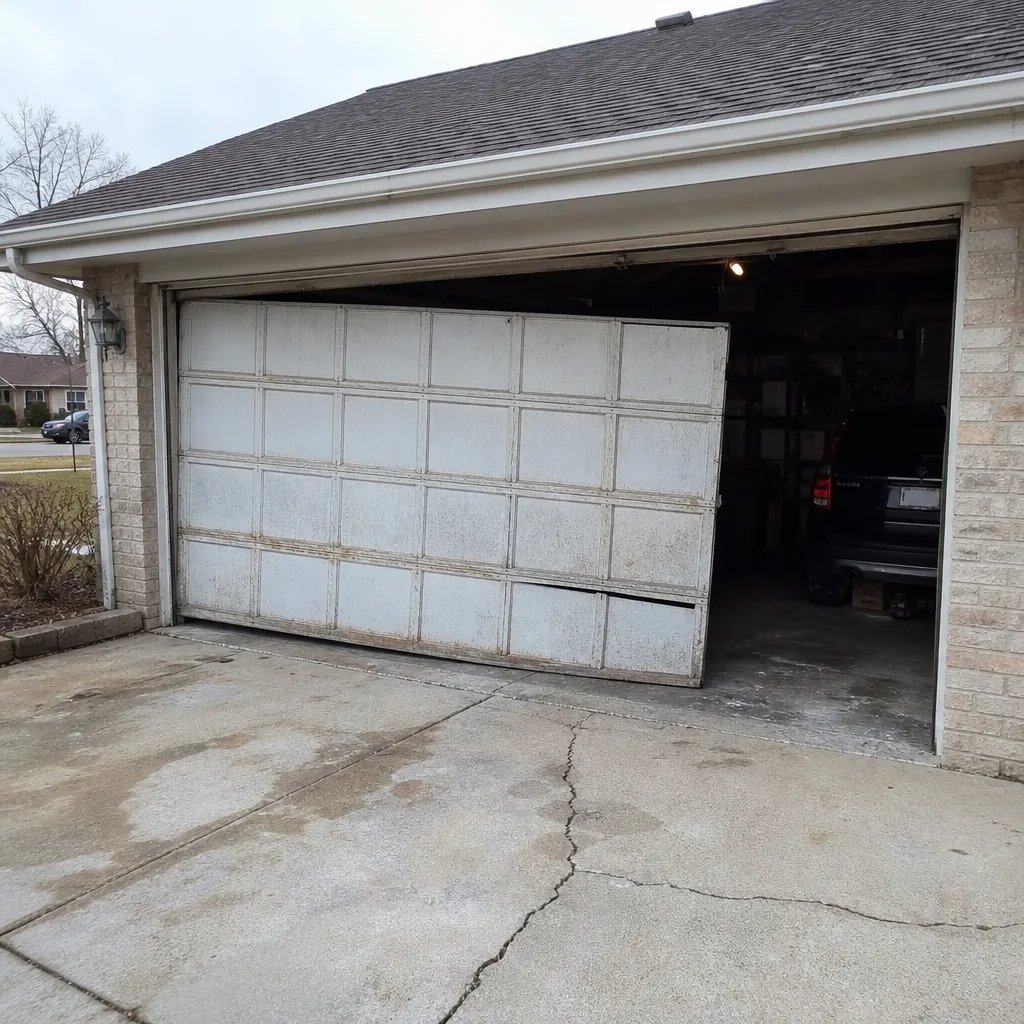 Before
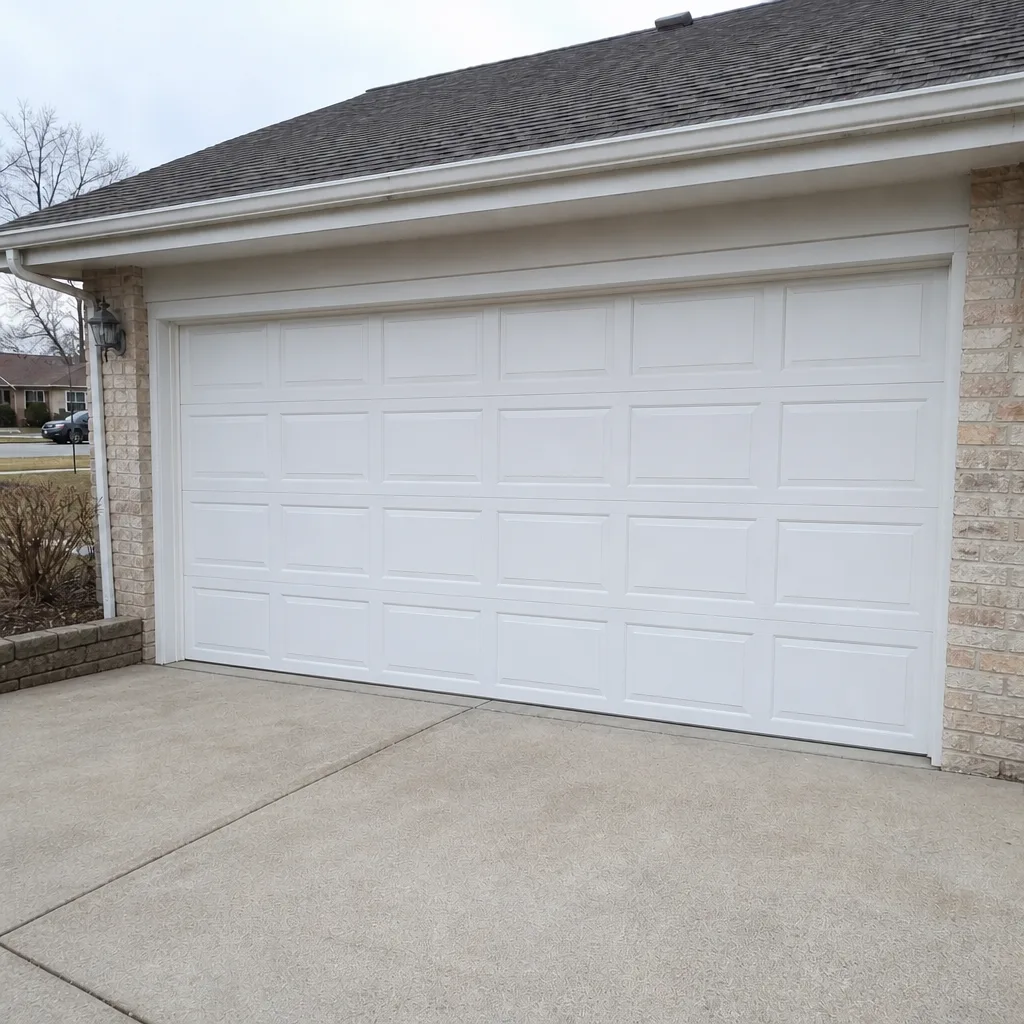 After
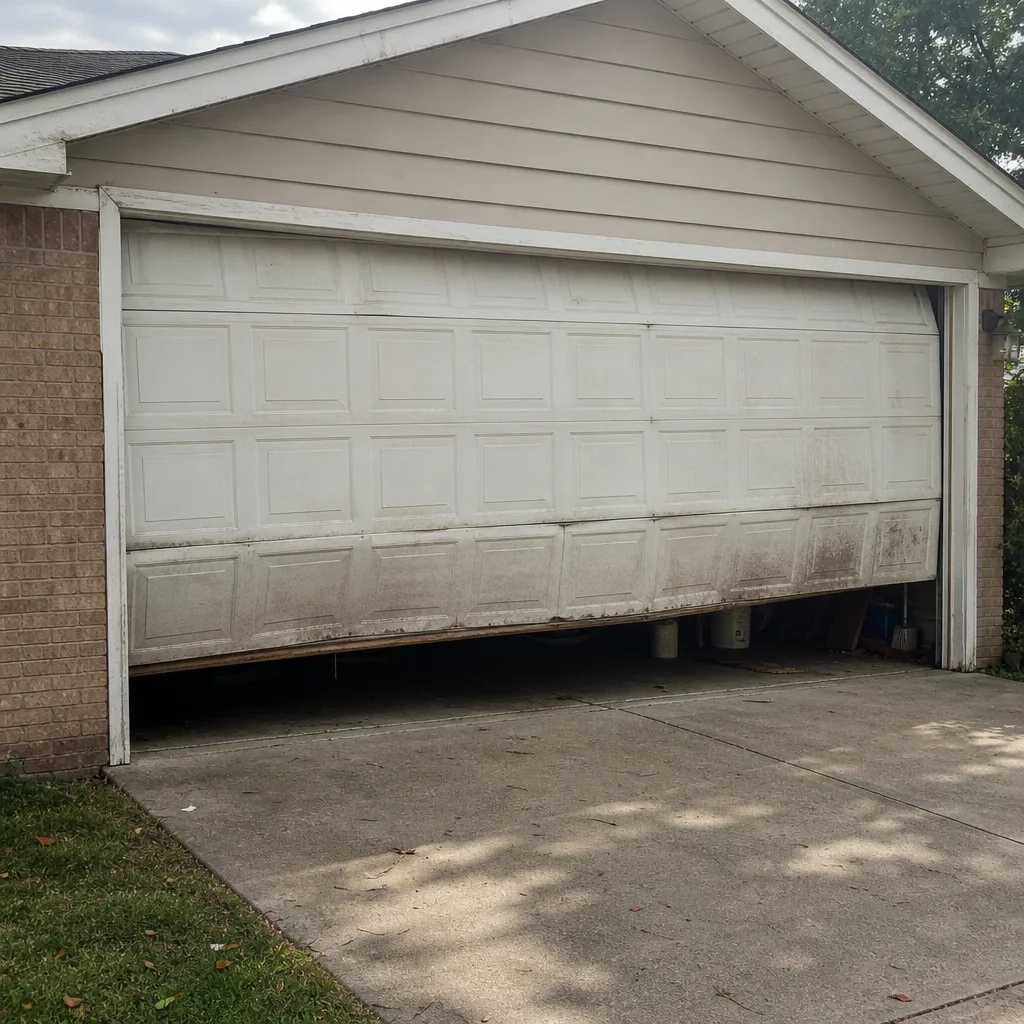 Before
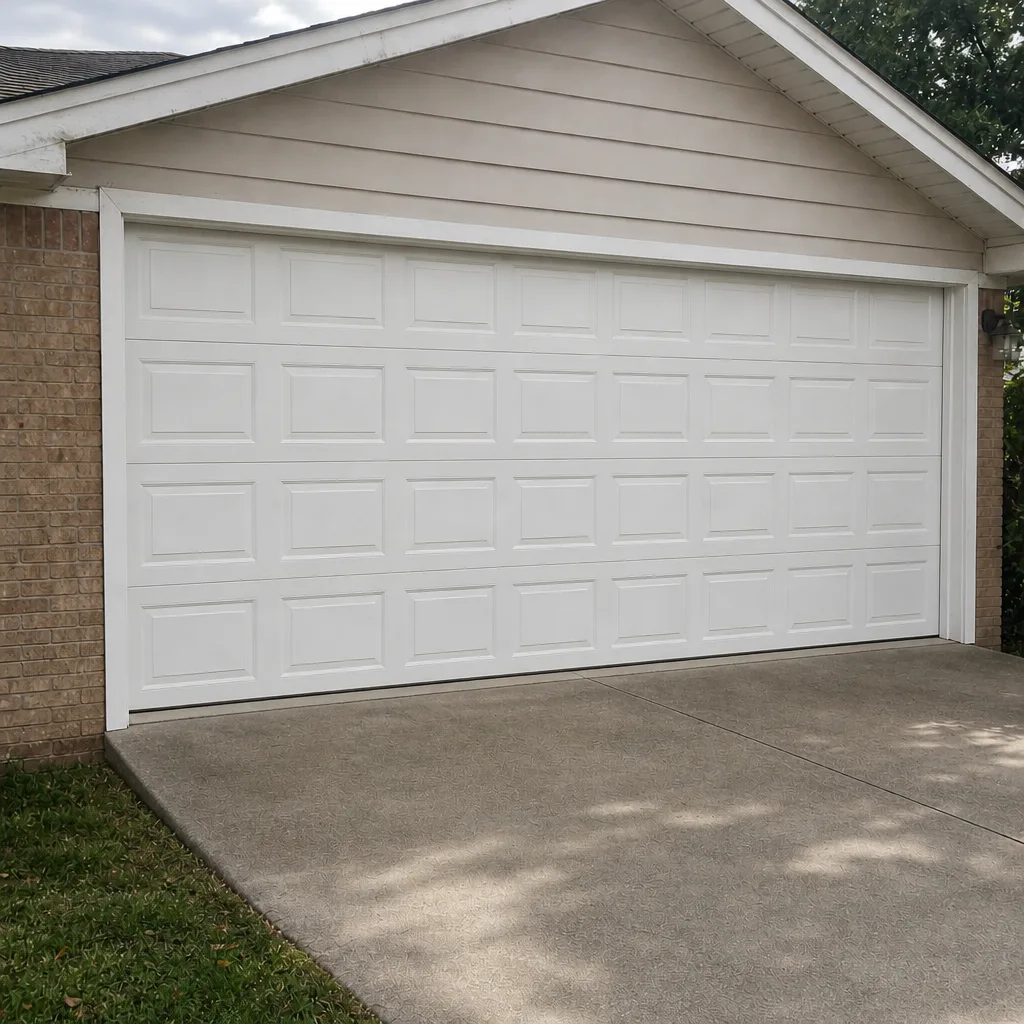 After
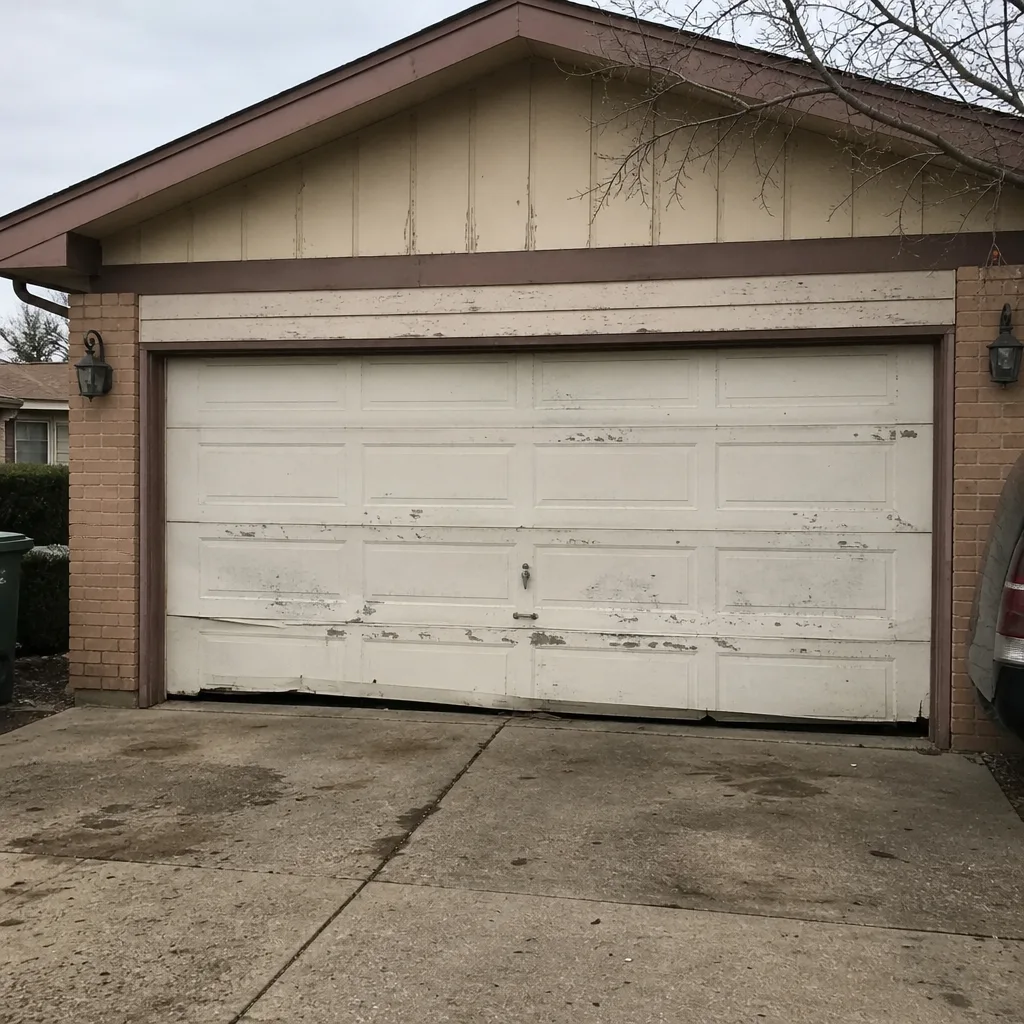 Before
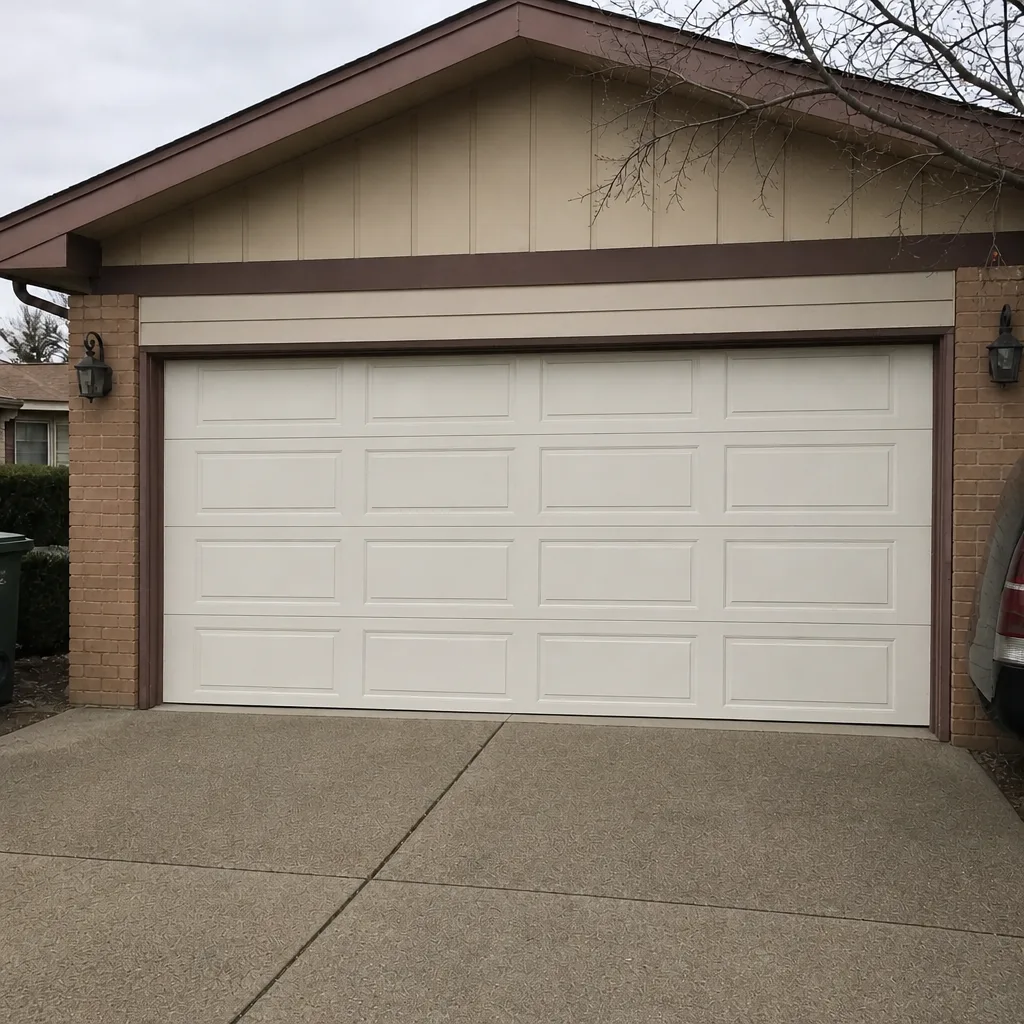 After
When to Call a Professional
Call when the problem is spring or cable related, when the door is bent or off-track and won’t operate safely, when you’ve changed the travel limits and the door still misbehaves, or when the opener runs but the door won’t move. Call for any stuck door, open or closed, especially overnight or before a morning you have to leave. Call when you can’t identify the cause and you’ve checked the sensor path and cleaned the lenses. And call if the door simply feels wrong: heavy, uneven, or noisy. Garage Door Repair Orland Park offers free estimates in Orland Park; call (855) 658-4224 and we’ll help you read the door and get the right repair.
The earlier you reach us, the smaller the repair tends to be. Our trained technicians work on the major brands and can diagnose the system rather than the symptom. You can also use the garage door repair page to see our full repair offering.
Frequently Asked Questions
First, check whether the emergency release was pulled or the carriage is disconnected, and check whether the springs appear broken (a visible gap in the torsion spring and a door that’s far too heavy to lift). If the opener runs but the door doesn’t, suspect the spring, the release, or the springs’ counterbalance. If the opener doesn’t run at all, check power, the battery in the remote, and the wall switch. Call (855) 658-4224 for a free estimate if you can’t identify it.
Usually, yes, but there are three causes: an obstruction in the sensor path, a sensor out of alignment, or a failed sensor or wiring. Clean the lenses, clear the path, and check that each sensor has a steady indicator light. If it still reverses with a clear path and both lights on, it’s likely a travel-limit issue or a failed sensor. Call for an exact diagnosis; estimates are free.
No. Torsion springs store enough energy to cause serious injury, and the related cables are under tension too. This is the one garage door repair that should always go to a trained technician. The safe move is to stop operating the door and call. Our spring repair specialists handle this safely and can give you a written estimate before any work starts.
In Orland Park, a door that grinds or drags in late winter is usually reacting to the season’s freeze-thaw cycles, which can bend a track, rust a roller, or build up grime in the track. It often needs lubrication and a track-and-roller inspection rather than a new opener. If the track is visibly bent or the door tilts, that’s a call to (855) 658-4224.
No. We quote the price and you agree to it before any work begins, so the written estimate is the number you pay. If the inspection reveals something different from what was discussed, we’ll talk about it with you before touching the door. Call (855) 658-4224 for a free estimate.
We service openers from LiftMaster, Chamberlain, Genie, and Craftsman, including the smart-home-compatible systems and legacy units. If your opener runs but the door doesn’t, or the door reverses, the problem may be the door rather than the opener, and we’ll diagnose both. Estimates are free; call (855) 658-4224.
The Bottom Line
Reading the door correctly is what saves you the wrong repair. The symptom-to-system matrix narrows it: a reversing door points at the sensors or travel limits, a loud bang points at a spring, a grinding door in late winter points at tracks and rollers, and an opener that runs without moving the door points at the release or the spring. You can safely handle cleaning, sensor alignment, and travel-limit settings. Springs and cables need a trained hand, and forcing a jammed door makes it worse. Call Garage Door Repair Orland Park at (855) 658-4224 for a free estimate and the right fix. Our technicians are trained on the major brands and can work from emergency call to new installation.
Written by the team at Garage Door Repair Orland Park.